
No name

The Federal Rules of Appellate Procedure (FRAP) are a set of rules, originally adopted in 1967 and amended regularly since then, promulgated by the Supreme Court of the United States on recommendation of an advisory committee, to govern procedures in cases under appeal in the United States Courts of Appeals.

Since most argument in appellate court centers around written briefs prepared by the litigating parties, the Rules govern how these briefs can be presented. Few jurisdictions allow for oral argument. Where allowed, oral argument is intended to clarify legal issues presented in the briefs and is ordinarily subject to a time limit.

In addition to these rules, procedure in the Courts of Appeals is governed by applicable statutes (particularly Title 28 of the United States Code) and by local rules adopted by each individual court. Many of these local rules incorporate Federal Rules of Appellate Procedure by reference.

Federal appellate courts are governed by the Federal Rules of Appellate Procedure. State appellate courts are governed by their own state rules of appellate procedure.

The Federal Rules of Criminal Procedure are the procedural rules that govern how federal criminal prosecutions are conducted in United States district courts, the general trial courts of the U.S. government. As such, they are the companion to the Federal Rules of Civil Procedure. The admissibility and use of evidence in criminal proceedings (as well as civil) is governed by the separate Federal Rules of Evidence. The U.S. Constitution, the Federal Rules and the federal court system's interpretations of both provide guidance and procedural canons that law enforcement must follow. Failure to follow such procedure may result in the suppression of evidence or the release of an arrested suspect.

Similarly, individual states have their own codes of criminal procedure of which many closely model the Federal Rules. While state constitutions and procedural rules may increase the protection afforded to criminal defendants, they may not offer less protection than that guaranteed by the U.S. Constitution.

The Federal Rules of Evidence (FRE) is a code of evidence law governing the admission of facts by which parties in the United States federal court system may prove their cases, both civil and criminal. The Rules were enacted in 1975, with subsequent amendments.

The Rules were the product of protracted academic, legislative, and judicial examination before being formally promulgated in 1975. U.S. states are free to adopt or maintain evidence rules different from the Federal Rules, but a substantial majority of states have adopted codes in whole or part based on the FRE.

Statistical data compiled by various Federal government agencies.

Whether for personal or business life, these finance and investing publications will help inform consumers and professionals alike while making financial and investment decisions. Includes specialty topics such as Bankruptcy & Business Credit; Banks & Financial Institutions; Securities, Commodities & Investments; and U.S. Savings Bonds.
2859 items
Page 46 of 120
Job Simulations: Trying out for a Federal Job
Title:
Job Simulations: Trying out for a Federal Job

Job Simulations: Trying out for a Federal Job

As Supervisors Retire: An Opportunity to Reshape Organizations
Title:
As Supervisors Retire: An Opportunity to Reshape Organizations

As Supervisors Retire: An Opportunity to Reshape Organizations

Fair and Equitable Treatment Progress Made and Challenges Remaining
Title:
Fair and Equitable Treatment Progress Made and Challenges Remaining

Fair and Equitable Treatment Progress Made and Challenges Remaining

Making the Right Connections: Targeting the Best Competencies for Training
Title:
Making the Right Connections: Targeting the Best Competencies for Training

Making the Right Connections: Targeting the Best Competencies for Training

Women in the Federal Government: Ambitions and Achievements
Title:
Women in the Federal Government: Ambitions and Achievements

Women in the Federal Government: Ambitions and Achievements

Managing Public Employees in the Public Interest: Employee Perspectives on Merit Principles in Federal Workplaces
Title:
Managing Public Employees in the Public Interest: Employee Perspectives on Merit Principles in Federal Workplaces

Managing Public Employees in the Public Interest: Employee Perspectives on Merit Principles in Federal Workplaces

Blowing the Whistle: Barriers to Federal Employees Making Disclosures
Title:
Blowing the Whistle: Barriers to Federal Employees Making Disclosures

Blowing the Whistle: Barriers to Federal Employees Making Disclosures

Prohibited Personnel Practices: Employee Perceptions
Title:
Prohibited Personnel Practices: Employee Perceptions

Prohibited Personnel Practices: Employee Perceptions

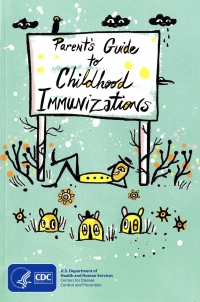
Parent's Guide to Childhood Immunizations
Title:
Parent's Guide to Childhood Immunizations

Parent's Guide to Childhood Immunizations

Telework: Weighing the Information, Determining an Appropriate Approach
Title:
Telework: Weighing the Information, Determining an Appropriate Approach

Telework: Weighing the Information, Determining an Appropriate Approach

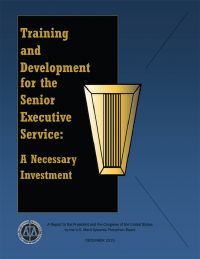
Training and Development for the Senior Executive Service: A Necessary Investment
Title:
Training and Development for the Senior Executive Service: A Necessary Investment

Training and Development for the Senior Executive Service: A Necessary Investment

Federal Employee Engagement: The Motivating Potential of Job Characteristics and Rewards
Title:
Federal Employee Engagement: The Motivating Potential of Job Characteristics and Rewards

Federal Employee Engagement: The Motivating Potential of Job Characteristics and Rewards

Clean Record Settlement Agreements and the Law
Title:
Clean Record Settlement Agreements and the Law

Clean Record Settlement Agreements and the Law

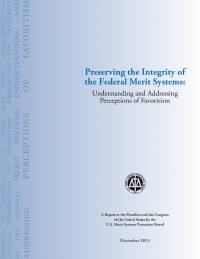
Preserving the Integrity of the Federal Merit Systems: Understanding and Addressing Perceptions of Favoritism
Title:
Preserving the Integrity of the Federal Merit Systems: Understanding and Addressing Perceptions of Favoritism

Preserving the Integrity of the Federal Merit Systems: Understanding and Addressing Perceptions of Favoritism

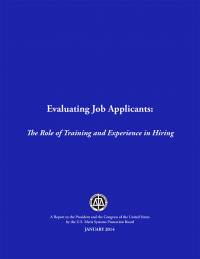
Evaluating Job Applicants: The Role of Training and Experience of Hiring
Title:
Evaluating Job Applicants: The Role of Training and Experience of Hiring

Evaluating Job Applicants: The Role of Training and Experience of Hiring

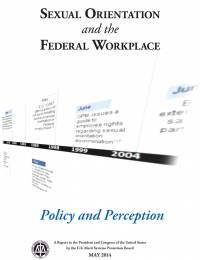
Sexual Orientation and the Federal Workplace
Title:
Sexual Orientation and the Federal Workplace

Sexual Orientation and the Federal Workplace

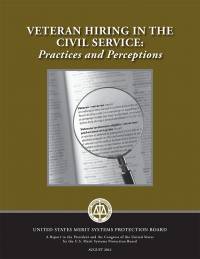
Veteran Hiring in the Civil Service: Practices and Perceptions
Title:
Veteran Hiring in the Civil Service: Practices and Perceptions

Veteran Hiring in the Civil Service: Practices and Perceptions

Veterans’ Employment Redress Laws in the Federal Civil Service
Title:
Veterans’ Employment Redress Laws in the Federal Civil Service

Veterans’ Employment Redress Laws in the Federal Civil Service

The Impact of Recruitment Strategy on Fair and Open Competition for Federal Jobs
Title:
The Impact of Recruitment Strategy on Fair and Open Competition for Federal Jobs

The Impact of Recruitment Strategy on Fair and Open Competition for Federal Jobs

What is Due Process in the Federal Civil Service Employment?
Title:
What is Due Process in the Federal Civil Service Employment?

What is Due Process in the Federal Civil Service Employment?

Preventing Nepotism in the Federal Civil Service
Title:
Preventing Nepotism in the Federal Civil Service

Preventing Nepotism in the Federal Civil Service

The Merit Systems Principles: Guiding the Fair and Effective Management of the Federal Workforce
Title:
The Merit Systems Principles: Guiding the Fair and Effective Management of the Federal Workforce

The Merit Systems Principles: Guiding the Fair and Effective Management of the Federal Workforce

Textbooks of Military Medicine: Military Preventive Medicine, Mobilization and Deployment, V. 2
Title:
Textbooks of Military Medicine: Military Preventive Medicine, Mobilization and Deployment, V. 2

Textbooks of Military Medicine: Military Preventive Medicine, Mobilization and Deployment, V. 2

Combat and Operational Behavioral Health
Title:
Combat and Operational Behavioral Health

Combat and Operational Behavioral Health

Back to Top